If you've ever wondered how Korean pork stays so tender and juicy, the answer isn't always complicated seasoning. Sometimes, it's all about the cooking method.
This recipe uses a simple waterless cooking technique, allowing pork to cook slowly with the natural moisture released from apples, onions, and green onions. The result is incredibly soft meat with almost no gamey smell and a naturally sweet aroma.
It's an easy recipe that requires only a few ingredients, making it perfect for both beginners and anyone who wants restaurant-quality pork at home.
What Is Korean Bossam?
Bossam is a traditional Korean dish made with boiled pork that is usually served with kimchi, lettuce, fresh vegetables, and dipping sauces.
Unlike smoked barbecue or roasted pork, bossam is known for its clean flavor, tender texture, and juicy meat. It's a popular choice for family dinners and special gatherings throughout Korea.
This version is even easier because it doesn't require making a separate broth.
Why Cook Pork Without Water?
It may sound unusual, but cooking pork without adding water has several advantages.
As the apples and vegetables slowly heat up, they naturally release moisture, creating steam inside the pot. This gentle cooking process helps the pork stay moist while locking in its natural juices.
Apple also helps:
- Reduce unwanted pork odor
- Add a subtle natural sweetness
- Tenderize the meat naturally
The result is soft, flavorful pork without overpowering seasonings.
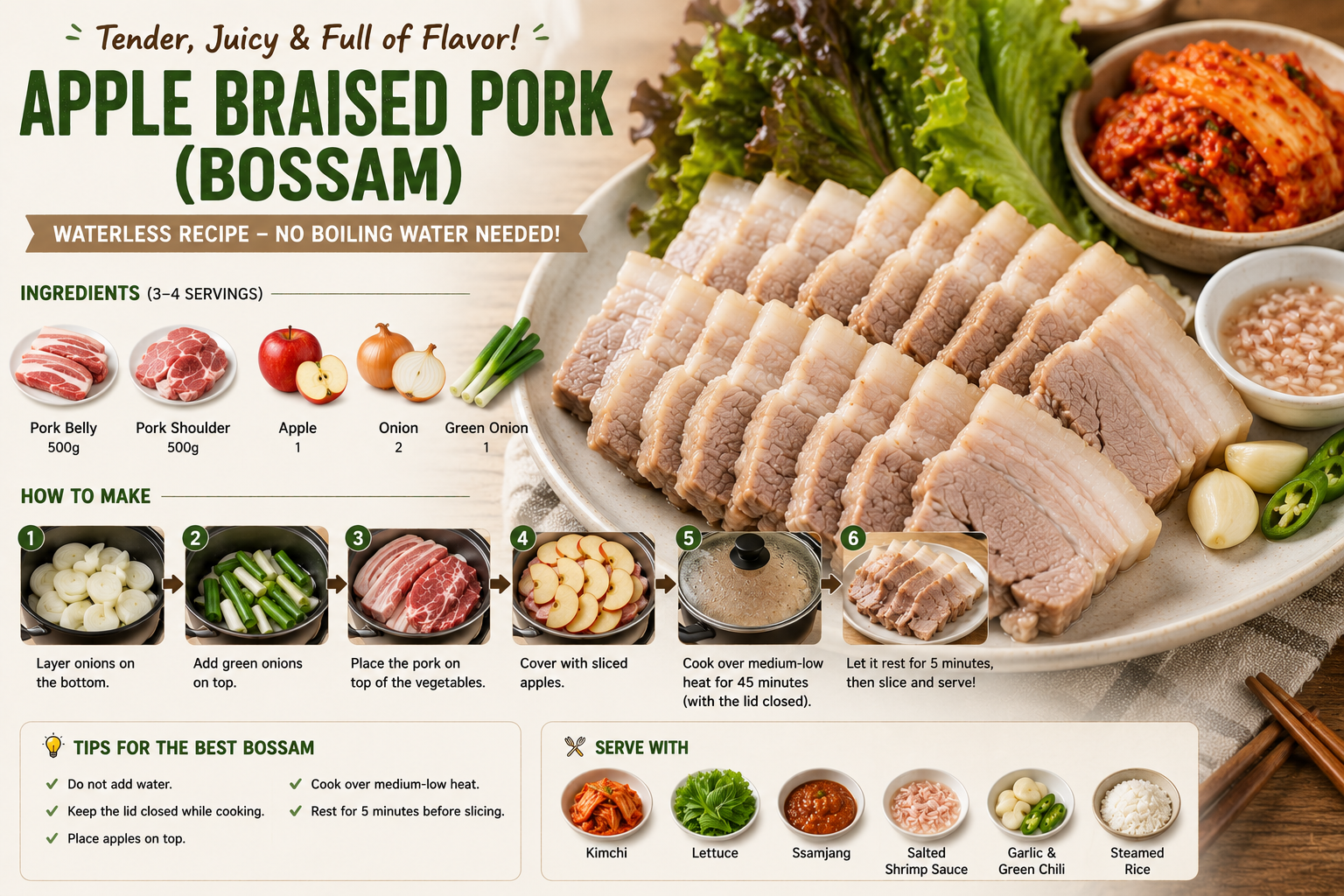
Ingredients (3–4 Servings)
Main Ingredients
- 500g pork belly
- 500g pork shoulder
- 1 apple
- 2 onions
- 1 green onion
Preparation
Apple
Wash well and slice thinly. There's no need to peel it.
Onion
Cut into thick slices to help retain moisture while cooking.
Green Onion
Cut into pieces about 3–4 cm (1–1½ inches) long.
Pork
Pat dry with paper towels to remove excess moisture.
How to Make Waterless Bossam
Step 1
Cover the bottom of a large pot with thick slices of onion.
Step 2
Place the green onions evenly over the onions.
These vegetables create a natural steaming layer and keep the pork from sticking to the bottom.
Step 3
Arrange the pork belly and pork shoulder on top.
If using pork belly, place the fat side down so the fat slowly melts during cooking.
Step 4
Cover the pork with the sliced apples.
As they cook, the apples release juice that naturally flavors and tenderizes the meat.
Step 5
Cover the pot with a tight-fitting lid and cook over medium-low heat for 45 minutes.
Do not open the lid while cooking. Keeping the steam inside is the secret to this recipe.
Step 6
Turn off the heat and let the pork rest for 5 minutes before slicing.
Slice into bite-sized pieces and serve immediately.
Tips for Perfect Bossam
- Do not add water.
- Keep the lid closed throughout cooking.
- Place the apples on top of the pork.
- Cook only over medium-low heat.
- Let the meat rest for a few minutes before slicing to keep it juicy.
What to Serve With Bossam
Traditional Korean side dishes pair perfectly with this recipe.
- Fresh kimchi
- Lettuce or perilla leaves
- Ssamjang (Korean dipping paste)
- Salted shrimp sauce
- Steamed rice
- Garlic and green chili peppers
Wrap a slice of pork with lettuce, kimchi, and a little ssamjang for the classic Korean way to enjoy bossam.
Common Mistakes
The Pork Turned Dry
The heat was probably too high.
Slow cooking over medium-low heat is essential for tender meat.
There Wasn't Enough Moisture
Avoid lifting the lid during cooking.
The apples, onions, and green onions will naturally produce enough steam without adding water.
Final Thoughts
This waterless bossam recipe proves that delicious food doesn't have to be complicated.
With just a few everyday ingredients, you can make incredibly tender Korean-style pork that's full of natural flavor and perfect for sharing with family and friends.
If you're looking for an easy way to experience authentic Korean home cooking, this recipe is a great place to start.
Happy cooking, and enjoy your homemade Korean bossam!