If you've ever visited Korea, there's a good chance you've seen a small neighborhood restaurant serving giant pork cutlets with rice, cabbage salad, cream soup, and pickles.
Long before trendy cafés and modern restaurants became popular, many taxi drivers in Korea relied on small neighborhood restaurants that served hearty meals at affordable prices.
These restaurants became known as Gisa Sikdang (driver's restaurants), and one of their signature dishes is the classic Korean pork cutlet.
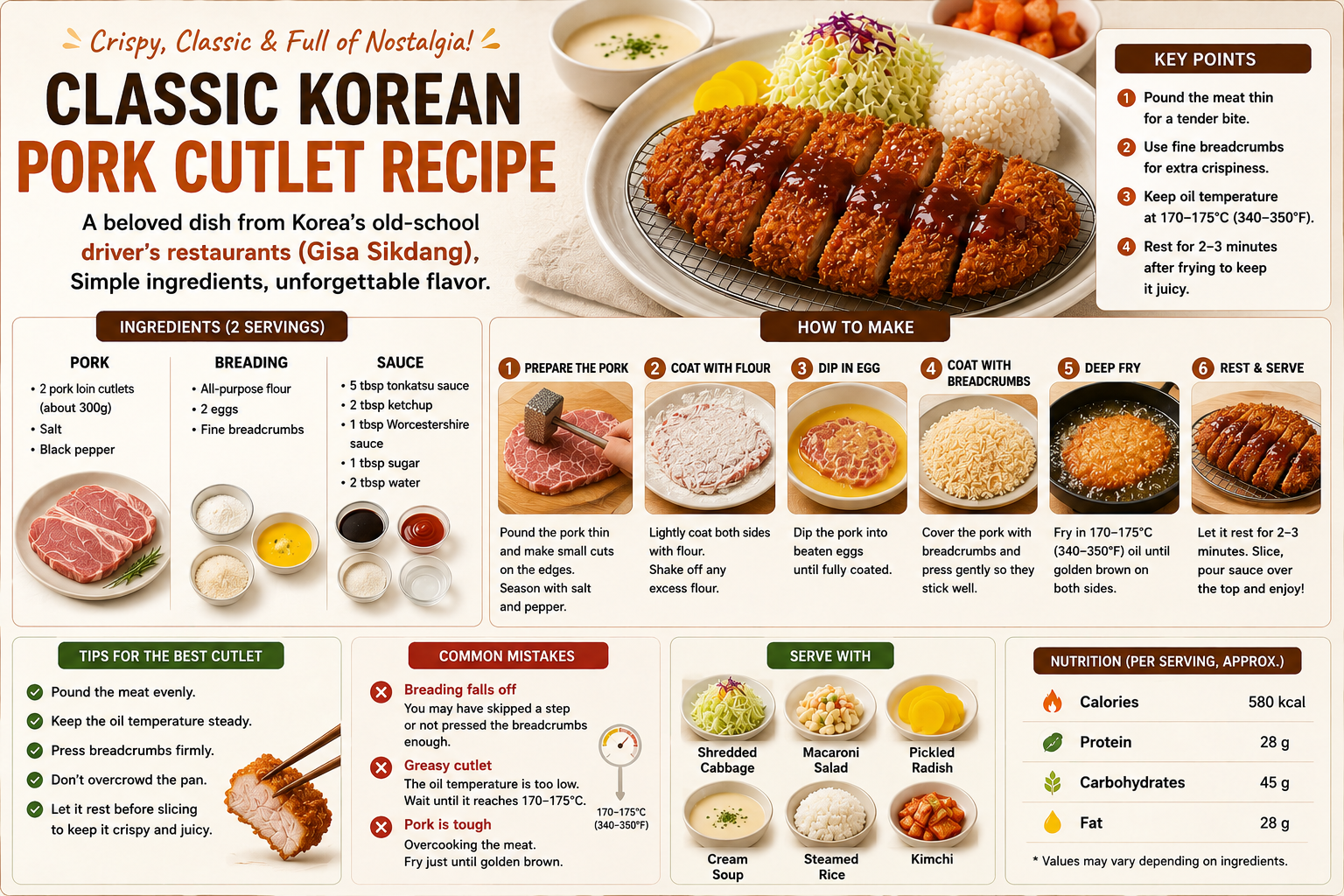
Unlike the thick Japanese-style tonkatsu, the Korean version is thinner, crispier, and served with a sweet and tangy brown sauce that many Koreans grew up eating.
The recipe is surprisingly simple, and with a few basic techniques, you can recreate the same crispy texture and old-fashioned flavor at home.
What Makes Korean Pork Cutlet Different?
Although Korean pork cutlet was inspired by Japanese tonkatsu many years ago, it has developed its own unique style.
The pork is pounded thin before cooking, coated with fine breadcrumbs, and deep-fried until golden brown.
Instead of a thick, rich sauce, Korean pork cutlet is usually served with a lighter sweet-and-savory brown sauce poured over the top or served on the side.
Most restaurants also include shredded cabbage salad, steamed rice, cream soup, and pickled radish, creating a complete meal rather than just a fried cutlet.
Ingredients (2 Servings)
Pork
- 2 pork loin cutlets (about 300g)
- Salt
- Black pepper
Breading
- All-purpose flour
- 2 eggs
- Fine breadcrumbs
Sauce
- 5 tbsp tonkatsu sauce
- 2 tbsp ketchup
- 1 tbsp Worcestershire sauce
- 1 tbsp sugar
- 2 tbsp water
Preparation
Prepare the Pork
Use a meat mallet (or the back of a knife) to gently pound the pork until it becomes evenly thin.
Make a few small cuts through the fat around the edges to prevent the meat from curling during frying.
Season lightly with salt and black pepper, then let it rest for about 10 minutes.
How to Make Korean Pork Cutlet
Step 1
Coat the pork lightly with flour.
Shake off any excess flour before moving to the next step.
Step 2
Dip the pork into beaten eggs until completely coated.
Step 3
Cover the pork with fine breadcrumbs.
Press the breadcrumbs gently with your hands so they stick firmly to the meat.
Step 4
Heat cooking oil to 170–175°C (340–350°F).
Fry one or two cutlets at a time until both sides become evenly golden brown.
Avoid overcrowding the pan, as this lowers the oil temperature.
Step 5
Transfer the cutlets to a wire rack or paper towel and let them rest for about 2–3 minutes.
This keeps the crust crispy while allowing excess oil to drain.
Step 6
Warm the sauce ingredients together in a small saucepan.
Pour the sauce over the sliced pork cutlet or serve it separately for dipping.
Tips for the Crispiest Pork Cutlet
- Pound the pork evenly before breading.
- Use fine breadcrumbs instead of coarse ones.
- Keep the oil between 170–175°C.
- Fry only a few cutlets at a time.
- Let the cutlets rest briefly before slicing.
Common Mistakes
The Breading Fell Off
Make sure you follow the breading order:
Flour → Egg → Breadcrumbs
Press the breadcrumbs gently onto the pork before frying.
The Cutlet Became Greasy
The oil temperature was probably too low.
Always wait until the oil reaches the correct temperature before frying.
The Pork Was Tough
The cutlet was cooked for too long.
Because the pork is thin, it cooks very quickly.
Remove it as soon as it turns golden brown.
What to Serve With Korean Pork Cutlet
A traditional Korean pork cutlet meal usually includes:
- Steamed rice
- Shredded cabbage salad
- Cream soup
- Pickled radish
- Macaroni salad
- Kimchi
Together, these simple side dishes create the nostalgic meal found in countless Korean neighborhood restaurants.
Final Thoughts
Classic Korean pork cutlet isn't about expensive ingredients or complicated cooking techniques.
It's all about achieving the perfect balance between a crispy crust, tender pork, and a sweet homemade sauce.
Whether you're trying Korean comfort food for the first time or recreating memories from a trip to Korea, this recipe is simple enough for beginners and satisfying enough to become a family favorite.
Thank you for visiting my blog.
I hope this recipe brings a little taste of Korea to your kitchen.
Happy cooking!