Bibimbap is one of Korea's most iconic dishes, loved for its colorful presentation, balanced nutrition, and fresh flavors.
Many people think bibimbap requires dozens of ingredients and a lot of preparation. While traditional versions often include several seasoned vegetables, making a delicious bibimbap at home can actually be much simpler.
With warm rice, a handful of vegetables, a fried egg, and a flavorful sauce, you can create a satisfying meal in less than 30 minutes.
This recipe focuses on simplicity while keeping the authentic taste that makes bibimbap one of Korea's most beloved comfort foods.
What Makes Bibimbap So Special?
The word Bibimbap (비빔밥) literally means "mixed rice."
The beauty of bibimbap isn't just the variety of ingredients—it's the balance between textures and flavors.
Warm rice, fresh vegetables, savory toppings, sesame oil, and spicy gochujang come together in every bite.
Because every ingredient has its own flavor, bibimbap feels fresh and satisfying without being heavy.
It's also one of the easiest Korean dishes to customize using whatever vegetables you already have in your refrigerator.
My Experience
When I first started making bibimbap at home, I believed the more ingredients I added, the better it would taste.
I spent a lot of time preparing spinach, mushrooms, bean sprouts, zucchini, carrots, and several other side dishes.
Eventually, I realized that wasn't necessary.
Using just three or four vegetables with a well-balanced sauce often tasted even better, and it reduced the preparation time by more than half.
Now it's one of my favorite meals whenever I want something healthy, quick, and satisfying.
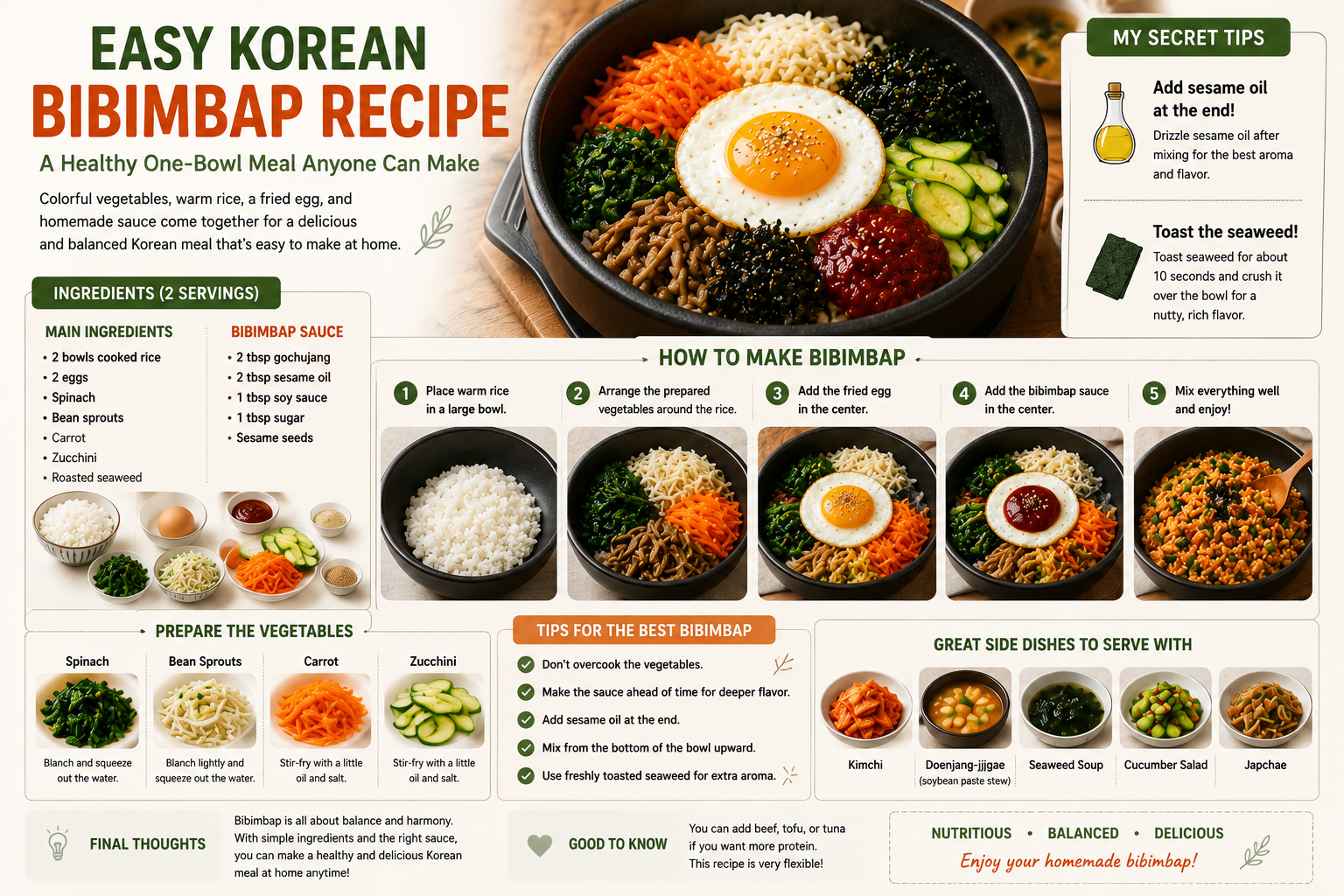
Ingredients (2 Servings)
Main Ingredients
- 2 bowls cooked rice
- 2 eggs
- Spinach
- Bean sprouts
- Carrot
- Zucchini
- Roasted seaweed
Bibimbap Sauce
- 2 tbsp gochujang (Korean red pepper paste)
- 2 tbsp sesame oil
- 1 tbsp soy sauce
- 1 tbsp sugar
- Sesame seeds
Preparation
Vegetables
Lightly blanch or stir-fry each vegetable separately.
Avoid overcooking them so they keep their fresh texture and vibrant color.
Egg
Cook a sunny-side-up egg with a slightly runny yolk.
The yolk becomes part of the sauce when everything is mixed together.
How to Make Bibimbap
Step 1
Place warm rice into a large serving bowl.
The rice should be warm but not extremely hot.
Slightly cooled rice helps preserve the texture of the vegetables.
Step 2
Arrange each vegetable neatly around the rice.
Using different colors makes the dish more visually appealing.
Step 3
Place the fried egg in the center.
Add roasted seaweed around the egg if desired.
Step 4
Mix the gochujang, sesame oil, soy sauce, sugar, and sesame seeds to make the sauce.
Spoon it into the center of the bowl.
Step 5
Just before eating, mix everything together thoroughly until every grain of rice is coated with the sauce.
My Favorite Little Trick
After trying several different versions, I found one small change that makes a noticeable difference.
Instead of mixing sesame oil into the sauce, I drizzle it over the bibimbap after everything has been mixed.
The aroma becomes much stronger, making the entire bowl taste fresher and more fragrant.
Another trick I often use is lightly toasting roasted seaweed for about 10 seconds before crushing it over the bowl.
It takes almost no extra effort, but the nutty aroma adds a surprising amount of flavor.
Tips for Perfect Bibimbap
- Don't overcook the vegetables.
- Make the sauce ahead of time for deeper flavor.
- Add sesame oil at the end.
- Mix from the bottom of the bowl upward.
- Use freshly toasted seaweed whenever possible.
Common Mistakes
The Bibimbap Tastes Bland
Many people don't use enough sesame oil.
A small drizzle at the end can completely change the flavor.
Too Much Water
Vegetables that aren't drained properly release water into the rice.
Always squeeze out excess moisture after blanching.
Too Much Gochujang
Adding too much gochujang can overpower the other ingredients.
A balanced sauce with sesame oil and soy sauce creates a much smoother flavor.
What to Serve with Bibimbap
Bibimbap pairs perfectly with:
- Doenjang-jjigae (soybean paste stew)
- Seaweed soup
- Kimchi
- Cucumber salad
- Egg drop soup
- Japchae
Final Thoughts
One of the reasons bibimbap has become so popular around the world is its flexibility.
You don't need expensive ingredients or perfect knife skills.
With a bowl of rice, a few fresh vegetables, and a simple homemade sauce, you can create a healthy Korean meal that's both beautiful and satisfying.
If you've never made bibimbap before, this easy version is the perfect place to start.
Thank you for visiting my blog.
I hope this recipe brings a little taste of Korea into your kitchen.
Happy cooking!