If there's one Korean dish that never fails to disappear quickly from the dinner table, it's Jeyuk Bokkeum.
Tender slices of pork coated in a rich, spicy sauce, quickly stir-fried over high heat, make this one of Korea's most popular everyday meals. It's bold, slightly sweet, a little smoky, and incredibly satisfying when served over a bowl of hot rice.
Although many people think restaurant-style Jeyuk Bokkeum is difficult to recreate, the secret isn't a long list of ingredients. It's all about the right cooking order, proper heat, and a well-balanced sauce.
In this recipe, I'll share the method that has worked best for me after making it many times at home.
What Makes Korean Jeyuk Bokkeum So Good?
Unlike Korean barbecue, where the meat is grilled at the table, Jeyuk Bokkeum is stir-fried quickly in a hot pan.
The sauce combines gochujang (Korean red pepper paste), soy sauce, garlic, and a touch of sweetness to create a perfect balance of spicy, savory, and slightly sweet flavors.
The vegetables are added at just the right moment so they stay crisp instead of becoming watery, allowing the pork to remain juicy while developing a slight caramelized finish.
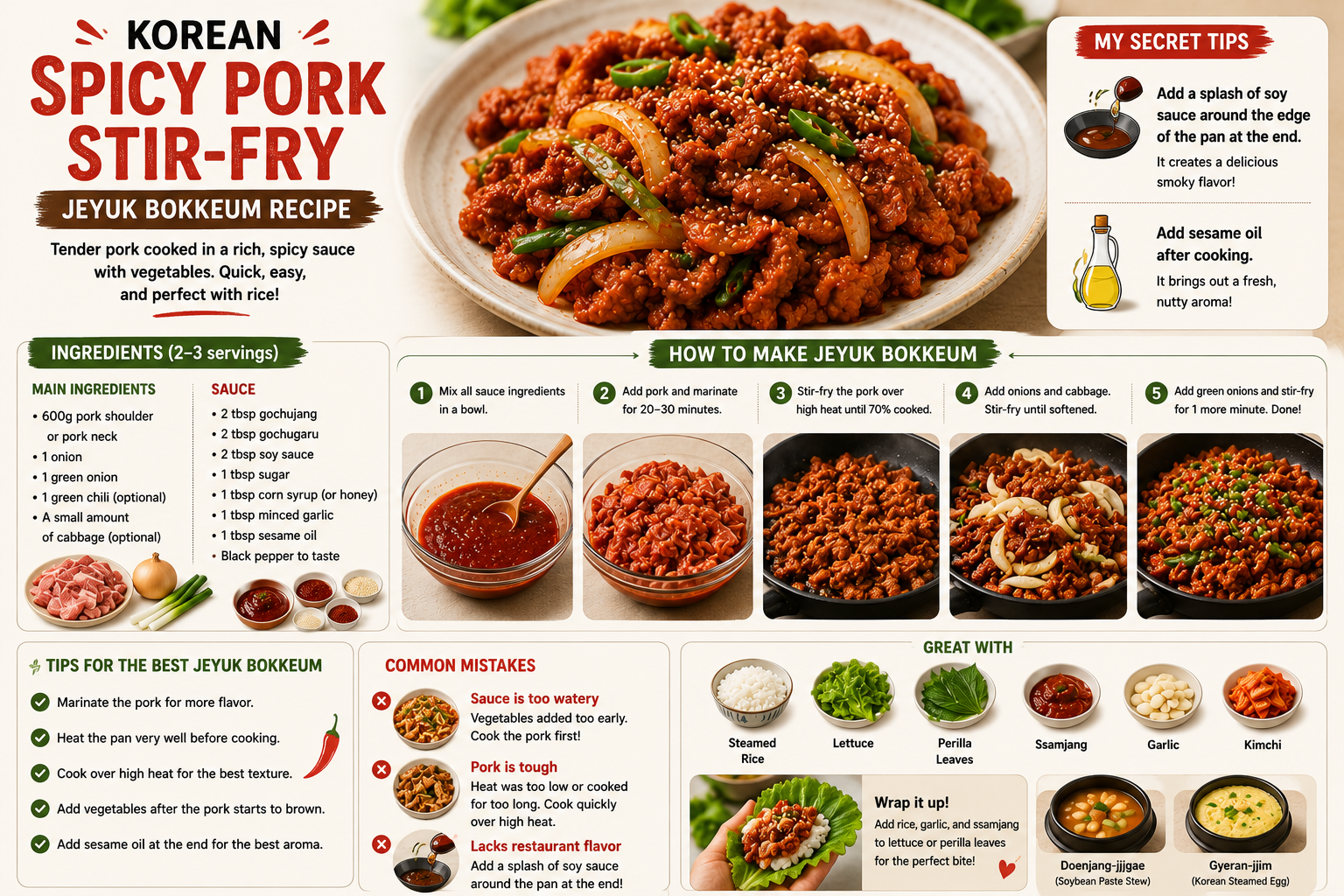
Ingredients (2–3 Servings)
Main Ingredients
- 600g (1.3 lb) pork shoulder or pork neck
- 1 onion
- 1 green onion
- 1 green chili (optional)
- A small amount of cabbage (optional)
Sauce
- 2 tbsp gochujang
- 2 tbsp Korean chili flakes (gochugaru)
- 2 tbsp soy sauce
- 1 tbsp sugar
- 1 tbsp corn syrup (or honey)
- 1 tbsp minced garlic
- 1 tbsp sesame oil
- Black pepper to taste
Preparation
Pork
Pat the pork dry with paper towels.
If the slices are large, cut them into bite-sized pieces.
Vegetables
Slice the onion into thick strips.
Cut the green onion diagonally into large pieces.
If using cabbage, roughly chop it into large pieces.
How to Make Korean Spicy Pork Stir-Fry
Step 1
In a bowl, combine all the sauce ingredients and mix well.
Let the sauce sit for about 10 minutes so the flavors blend together.
Step 2
Add the pork to the sauce and mix until evenly coated.
Marinate for 20–30 minutes.
Step 3
Heat a large skillet or wok over high heat.
Add a small amount of oil and stir-fry the pork until it's about 70% cooked.
Step 4
Add the onions and cabbage.
Continue stir-frying over high heat until the vegetables begin to soften.
Step 5
Add the green onions during the final minute of cooking.
Turn off the heat and sprinkle with sesame seeds before serving.
My Experience
When I first started making Jeyuk Bokkeum, I always added the vegetables at the beginning.
The onions and cabbage released too much water, making the sauce thin and preventing the pork from developing that rich restaurant-style flavor.
Now I always cook the pork first, then add the vegetables, and finally finish with the green onions.
The difference is surprisingly noticeable.
The sauce stays thick and glossy, while the vegetables remain slightly crisp.
My Favorite Little Trick
One trick I always use is adding half a tablespoon of soy sauce around the edge of the hot pan just before turning off the heat.
As the soy sauce hits the hot surface, it creates a subtle roasted aroma that makes the dish taste much closer to what you'd get in a Korean restaurant.
Another tip is to drizzle the sesame oil after cooking, rather than mixing it into the sauce.
The fresh aroma becomes much stronger without making the dish greasy.
Tips for Perfect Jeyuk Bokkeum
- Marinate the pork before cooking.
- Heat the pan thoroughly before adding the meat.
- Cook over high heat.
- Add vegetables after the pork begins to brown.
- Finish with sesame oil and sesame seeds.
Common Mistakes
The Sauce Is Too Watery
The vegetables were probably added too early.
Cook the pork first, then add the vegetables.
The Pork Is Tough
The heat wasn't high enough, or the meat cooked for too long.
Jeyuk Bokkeum should be cooked quickly over high heat.
It Doesn't Taste Like Restaurant Food
Try adding a small splash of soy sauce around the edge of the pan during the final minute of cooking.
This simple trick creates a deeper, slightly smoky flavor.
What to Serve with Jeyuk Bokkeum
This spicy pork pairs perfectly with:
- Steamed rice
- Lettuce
- Perilla leaves
- Ssamjang
- Garlic
- Kimchi
- Korean soybean paste stew (Doenjang-jjigae)
- Korean steamed egg (Gyeran-jjim)
Wrap the pork in lettuce with rice, garlic, and a little ssamjang for the classic Korean barbecue experience.
Final Thoughts
Jeyuk Bokkeum proves that great Korean cooking doesn't have to be complicated.
With a simple homemade sauce, high heat, and the right cooking order, you can create a dish that's spicy, savory, and packed with flavor.
Whether you're making dinner for your family or introducing Korean food to friends, this recipe is an easy way to bring authentic Korean flavors into your kitchen.
Thank you for visiting my blog.
I hope this recipe becomes one of your favorite Korean meals.
Happy cooking!