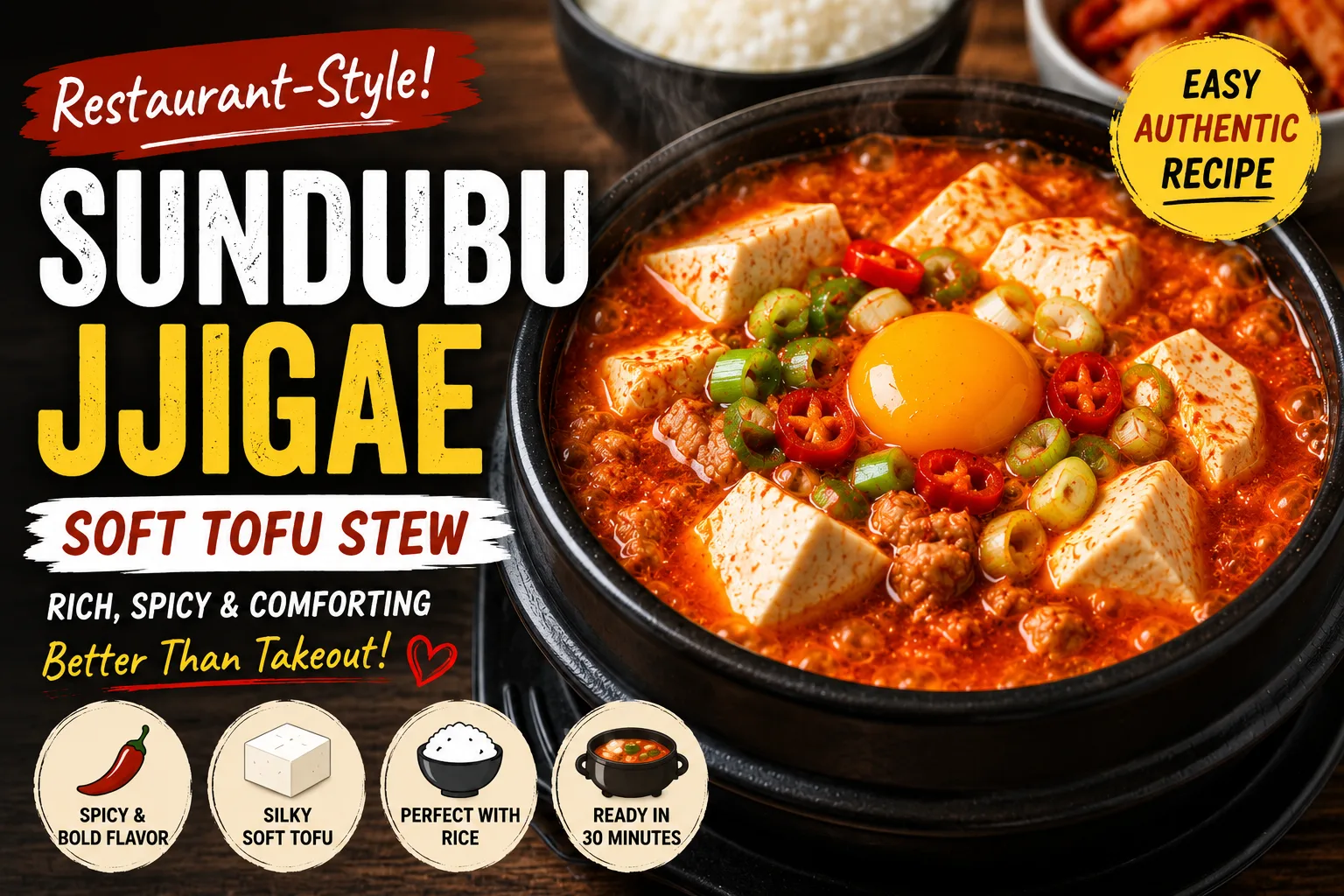
Sundubu Jjigae (순두부찌개) is one of Korea's most comforting and beloved everyday meals.
Served bubbling hot in a stone pot, this spicy stew combines silky soft tofu, savory broth, tender pork, and a perfectly cooked egg. It's the kind of meal many Koreans grow up eating at home and ordering at local restaurants year-round.
Many people assume restaurant-quality Sundubu Jjigae requires complicated stocks or secret ingredients.
In reality, the biggest difference comes from how you build the flavor.
After making this recipe countless times at home, I found that a few small techniques made a much bigger difference than adding more ingredients.
This is the method I now use every time.
What Makes Korean Sundubu Jjigae So Rich?
A great bowl of Sundubu Jjigae begins long before the broth is added.
One of the biggest secrets is making scallion oil first.
Cooking chopped green onions in oil releases their natural sweetness and aroma, creating the flavorful base of the stew.
The second secret is briefly cooking Korean chili flakes in the oil.
Instead of simply adding chili flakes to the broth, this creates a beautiful red chili oil that gives the stew its deep color and rich aroma.
Finally, soft tofu should always be added near the end.
Cooking it for too long causes it to lose its delicate texture.
Ingredients (2–3 Servings)
Main Ingredients
- 1 package soft tofu (Sundubu)
- 200g pork shoulder or pork neck
- ½ onion
- 1 green onion
- 1 green chili (optional)
- 1 egg
Seasoning
- 2 tbsp Korean chili flakes (gochugaru)
- 1 tbsp minced garlic
- 1 tbsp Korean soup soy sauce
- 1 tbsp tuna sauce or fish sauce
- Black pepper
Broth
- 600ml water or anchovy stock
Preparation
Pork
Cut the pork into bite-sized pieces and pat dry with paper towels.
Vegetables
Slice the onion into thick strips.
Finely chop the green onion.
The green onion is essential because it creates the aromatic oil that gives the stew its signature flavor.
The soft tofu can simply be scooped into large pieces using a spoon.
How to Make Sundubu Jjigae
Step 1
Heat cooking oil in a pot.
Add the chopped green onions and cook until fragrant to make scallion oil.
Step 2
Add the Korean chili flakes.
Cook over low heat for about 20–30 seconds until the oil turns bright red.
Be careful not to burn the chili flakes.
Step 3
Add the pork and cook until the surface is lightly browned.
Add the onion and continue cooking for another 2–3 minutes.
Step 4
Pour in the broth.
Add the Korean soup soy sauce, minced garlic, and tuna sauce.
Simmer over medium heat for about 10 minutes.
Step 5
Add the soft tofu in large spoonfuls.
Cook for another 3–4 minutes.
Crack an egg into the center, then finish with green onions and optional chili before serving.
My Experience
When I first started making Sundubu Jjigae, I simply added the chili flakes directly into the broth.
The stew was spicy, but it never had the deep flavor I tasted at Korean restaurants.
Later, I learned to make scallion oil first and briefly cook the chili flakes before adding the broth.
That one small change completely transformed the stew.
The broth became richer, more aromatic, and much closer to the restaurant version.
Now I never skip this step.
My Favorite Little Tricks
One ingredient I almost always add is a spoonful of tuna sauce.
It doesn't make the stew taste fishy.
Instead, it quietly boosts the umami and gives the broth a richer, more satisfying finish.
Another trick is leaving the egg untouched for about one minute after cracking it into the stew.
Breaking the yolk too early makes the broth cloudy.
Letting it cook gently before mixing creates a creamier texture that I personally enjoy much more.
Tips for Perfect Sundubu Jjigae
- Always make scallion oil first.
- Cook the chili flakes over low heat.
- Add soft tofu at the end.
- Add the egg during the final minute.
- Simmer gently instead of boiling aggressively.
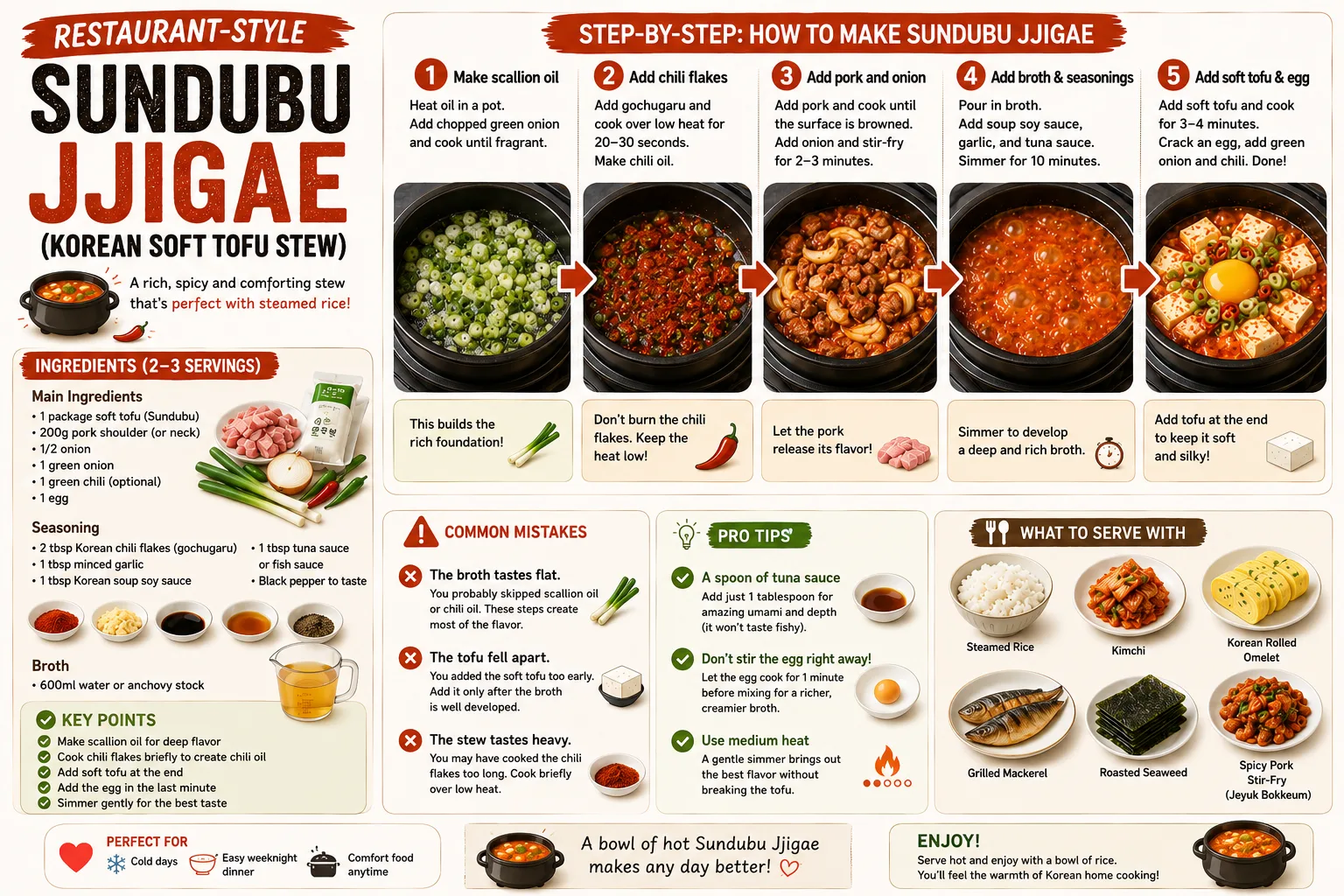
Common Mistakes
The Broth Tastes Flat
You probably skipped making the scallion oil or chili oil.
Those two steps build most of the stew's flavor.
The Tofu Fell Apart
Soft tofu was added too early.
Add it only after the broth has fully developed.
The Stew Tastes Heavy
The chili flakes may have been cooked for too long.
Keep the heat low and cook them briefly to avoid bitterness.
What to Serve with Sundubu Jjigae
This comforting stew pairs perfectly with:
- Steamed rice
- Kimchi
- Korean rolled omelet (Gyeran Mari)
- Grilled mackerel
- Roasted seaweed
- Jeyuk Bokkeum (Spicy Pork Stir-Fry)
Final Thoughts
Sundubu Jjigae isn't complicated.
A rich bowl of Korean soft tofu stew comes from a few simple techniques—building scallion oil, creating chili oil, and adding the tofu at just the right moment.
Once you understand these small details, making restaurant-quality Sundubu Jjigae at home becomes surprisingly easy.
Thank you for visiting my blog.
I hope this recipe brings the warmth and comfort of authentic Korean home cooking into your kitchen.
Happy cooking!