Dakgalbi (닭갈비) is one of Korea's most popular comfort foods.
Made with tender chicken, fresh vegetables, and a spicy-sweet gochujang sauce, this iconic stir-fried dish is famous for its bold flavor and irresistible aroma.
Although Dakgalbi originally became famous in the city of Chuncheon, it's now enjoyed all across Korea. Whether served on a large iron skillet at a restaurant or cooked at home for family dinner, it's a meal that brings people together.
Many people think restaurant-style Dakgalbi requires special equipment or secret ingredients.
The truth is much simpler.
With the right cooking order, a balanced marinade, and high heat, you can make delicious Dakgalbi in your own kitchen.
What Makes Dakgalbi So Delicious?
The secret isn't using more sauce.
It's allowing each ingredient to cook at the right time.
Chicken should brown first to develop flavor.
Vegetables should be added later so they stay crisp instead of releasing too much water.
Finally, fresh perilla leaves are added at the very end, giving the dish its signature aroma.
These three simple techniques make a huge difference.
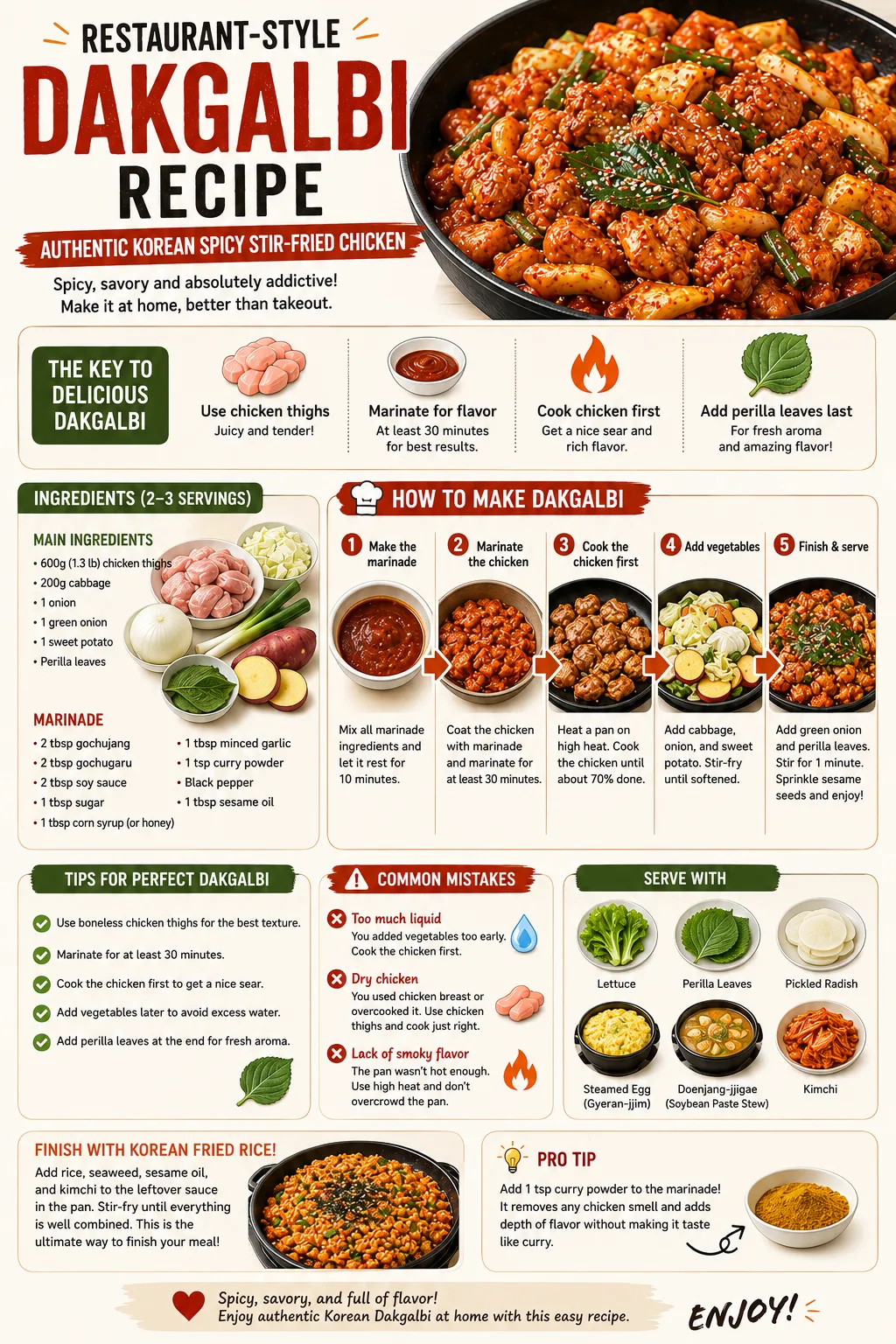
Ingredients (2–3 Servings)
Main Ingredients
- 600g (1.3 lb) boneless chicken thighs
- 200g cabbage
- 1 onion
- 1 green onion
- 1 sweet potato
- A handful of perilla leaves
Marinade
- 2 tbsp gochujang (Korean red pepper paste)
- 2 tbsp gochugaru (Korean chili flakes)
- 2 tbsp soy sauce
- 1 tbsp sugar
- 1 tbsp corn syrup (or honey)
- 1 tbsp minced garlic
- 1 tsp curry powder
- Black pepper
- 1 tbsp sesame oil
Preparation
Chicken
Cut the chicken thighs into bite-sized pieces.
Pat them dry with paper towels before marinating.
Vegetables
Roughly chop the cabbage.
Slice the onion thickly.
Cut the sweet potato into slices about 1 cm (½ inch) thick.
Stack the perilla leaves and slice them into thin strips.
How to Make Dakgalbi
Step 1
Mix all the marinade ingredients together.
Let the sauce rest for about 10 minutes before using.
Step 2
Coat the chicken evenly with the marinade.
Marinate for at least 30 minutes.
Step 3
Heat a large skillet or grill pan over high heat.
Cook the chicken first until it's about 70% done.
Step 4
Add the cabbage, onion, and sweet potato.
Continue stir-frying over high heat until the vegetables begin to soften.
Step 5
Add the green onion and perilla leaves during the final minute of cooking.
Sprinkle with sesame seeds and serve immediately.
My Experience
When I first started making Dakgalbi, I always cooked the chicken and vegetables together.
The cabbage released so much moisture that the chicken ended up steaming instead of browning.
The sauce became watery, and the dish lacked the rich flavor I expected.
Now I always cook the chicken first before adding the vegetables.
The difference is remarkable.
The sauce stays thick and glossy, while the chicken develops a slightly smoky flavor that's much closer to what you get at a Korean Dakgalbi restaurant.
My Favorite Little Tricks
One ingredient I almost always add is a small teaspoon of curry powder.
It doesn't make the dish taste like curry.
Instead, it quietly removes any unwanted chicken smell while adding extra depth to the sauce.
Another trick is adding the perilla leaves only at the very end.
Their fresh aroma instantly transforms the entire dish and gives it that unmistakable Korean restaurant flavor.
Tips for Perfect Dakgalbi
- Chicken thighs work much better than chicken breast.
- Let the marinade rest before using it.
- Marinate the chicken for at least 30 minutes.
- Cook the chicken before adding vegetables.
- Add the perilla leaves at the end.
Common Mistakes
The Sauce Is Too Watery
The vegetables were probably added too early.
Cook the chicken first, then stir-fry the vegetables.
The Chicken Is Dry
Chicken breast was used, or the chicken cooked for too long.
Boneless chicken thighs stay much juicier.
It Doesn't Taste Like Restaurant Dakgalbi
The pan may not have been hot enough.
A properly preheated pan helps develop the slightly smoky flavor that makes Dakgalbi so satisfying.
What to Serve with Dakgalbi
Dakgalbi is traditionally served with:
- Lettuce
- Perilla leaves
- Pickled radish
- Korean steamed egg (Gyeran-jjim)
- Doenjang-jjigae (soybean paste stew)
- Kimchi
After finishing most of the chicken, many Korean restaurants stir-fry rice with the remaining sauce.
If you have leftover sauce in the pan, add cooked rice, roasted seaweed, sesame oil, and a little kimchi to make the perfect fried rice.
Don't skip this final step—many people think it's the best part of the meal.
Final Thoughts
Dakgalbi is proof that a few simple techniques can completely change the flavor of a dish.
Cooking the chicken first, adding vegetables later, and finishing with fresh perilla leaves creates a stir-fry that's spicy, savory, and packed with smoky flavor.
Whether you're trying Korean food for the first time or recreating memories from a trip to Korea, this recipe is an easy and rewarding place to start.
Thank you for visiting my blog.
I hope this recipe brings the flavors of authentic Korean Dakgalbi into your kitchen.
Happy cooking!