Japchae (잡채) is one of Korea's most beloved celebration dishes.
Whether it's Lunar New Year, Chuseok, birthdays, weddings, or family gatherings, a large plate of glossy glass noodles is almost always on the table.
Although Japchae looks impressive, many home cooks struggle with noodles that become soggy, vegetables that release too much water, or seasoning that doesn't blend evenly.
After making Japchae many times at home, I realized that great Japchae isn't about adding more ingredients—it's about cooking each ingredient at the right time.
Today I'll share the simple techniques that helped me make Japchae with chewy noodles, vibrant vegetables, and the rich flavor you usually find at Korean banquet tables.
Why Is Japchae Served on Special Occasions?
Japchae has a long history in Korean cuisine.
It is believed to have originated during the Joseon Dynasty as a royal court dish.
Interestingly, the earliest version didn't even contain glass noodles.
Sweet potato glass noodles were introduced much later and eventually became the signature ingredient that defines modern Japchae.
Because it combines colorful vegetables, meat, mushrooms, and noodles on one plate, Japchae has come to symbolize abundance, harmony, and celebration.
That's why it remains one of Korea's most popular dishes for holidays and special family events.
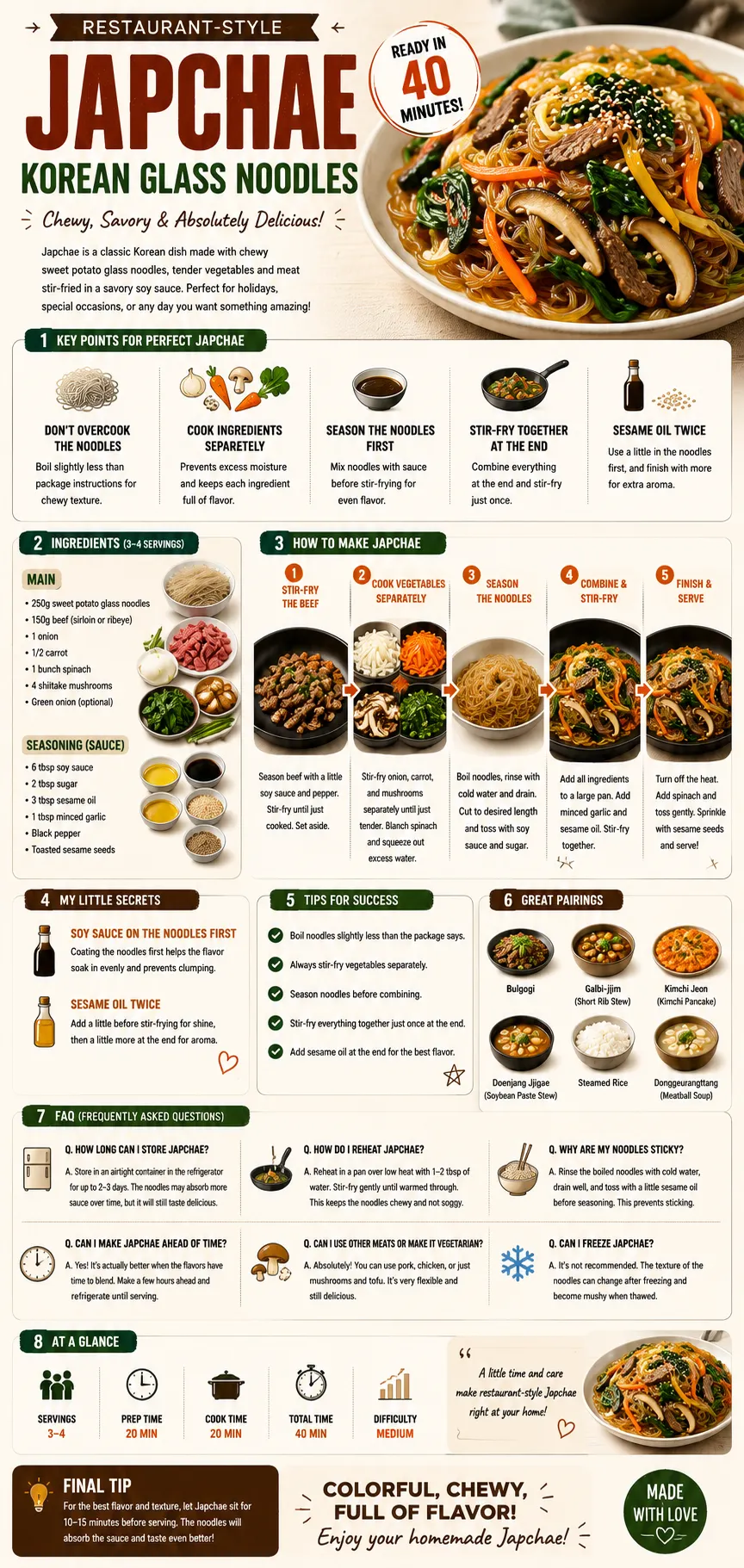
The Three Secrets to Perfect Japchae
Slightly Undercook the Noodles
Glass noodles continue cooking during stir-frying.
Cooking them about 30 seconds less than the package instructions helps them stay pleasantly chewy.
Stir-Fry the Vegetables Separately
This step may take a little longer, but it's worth it.
Cooking each vegetable individually keeps excess moisture away from the noodles while preserving each vegetable's natural texture.
Season the Noodles First
Instead of seasoning everything at the very end, toss the cooked noodles with soy sauce and sugar first.
This allows the noodles to absorb flavor evenly before combining everything together.
Ingredients (3–4 Servings)
Main Ingredients
- 250g Korean sweet potato glass noodles
- 150g beef (sirloin or ribeye)
- 1 onion
- ½ carrot
- 1 bunch spinach
- 4 shiitake mushrooms
- Green onion (optional)
Sauce
- 6 tbsp soy sauce
- 2 tbsp sugar
- 3 tbsp sesame oil
- 1 tbsp minced garlic
- Black pepper
- Toasted sesame seeds
Preparation
Glass Noodles
Boil according to the package instructions, but remove them about 30 seconds early.
Rinse briefly under cold water, drain well, and cut into shorter lengths if desired.
Beef
Slice thinly.
Season lightly with soy sauce and black pepper, then let it marinate for about 10 minutes.
Vegetables
Slice the onion, carrot, and mushrooms into thin strips.
Blanch the spinach, squeeze out excess water, and roughly chop it.
How to Make Japchae
Step 1
Stir-fry the beef until just cooked.
Transfer it to a separate plate.
Step 2
Cook the onion, carrot, mushrooms, and spinach separately.
Each vegetable should be lightly cooked while still keeping its texture.
Step 3
Toss the cooked glass noodles with soy sauce and sugar before combining them with the other ingredients.
Step 4
Add the noodles, beef, vegetables, minced garlic, and sesame oil to a large pan.
Stir-fry everything together briefly.
Step 5
Turn off the heat.
Finish with another drizzle of sesame oil and plenty of toasted sesame seeds.
Serve warm or at room temperature.
My Experience
When I first started making Japchae, I cooked every vegetable together in one pan.
It certainly saved time, but the vegetables released so much moisture that the noodles became soft and sticky.
Later, I switched to cooking each vegetable separately before combining everything at the end.
The difference surprised me.
The noodles stayed chewy, the vegetables kept their individual texture, and the finished dish looked much closer to the Japchae served at Korean celebrations.
Even the leftovers tasted better the next day.
My Favorite Little Tricks
One habit I never skip is using sesame oil twice.
I add a small amount to the noodles after boiling them to keep them glossy and prevent sticking.
Then I add another drizzle after turning off the heat to preserve its rich aroma.
Another trick is grinding toasted sesame seeds just before serving.
Freshly crushed sesame seeds have a much stronger nutty fragrance than pre-ground ones.
Tips for Perfect Japchae
- Slightly undercook the noodles.
- Stir-fry vegetables separately.
- Season the noodles before mixing.
- Stir-fry everything together only once.
- Finish with sesame oil and freshly crushed sesame seeds.
What to Serve with Japchae
Japchae pairs beautifully with many traditional Korean dishes, including:
- Bulgogi
- Galbi-jjim (Braised Short Ribs)
- Korean Meat Patties (Donggeurangttaeng)
- Kimchi Pancakes
- Doenjang Jjigae
- Steamed Rice
Frequently Asked Questions
Can I store Japchae in the refrigerator?
Yes.
Store it in an airtight container for up to 2–3 days.
The noodles will continue absorbing the sauce, but the flavor remains delicious.
What's the best way to reheat Japchae?
Instead of using only a microwave, lightly stir-fry it in a pan with 1–2 tablespoons of water.
This helps restore the chewy texture of the noodles.
Why do my noodles stick together?
Rinse the noodles briefly with cold water after boiling, drain well, and toss them with a small amount of sesame oil before mixing.
Can I make Japchae without beef?
Absolutely.
Pork, chicken, shrimp, or extra mushrooms all work well.
Japchae is one of the most flexible Korean dishes.
Final Thoughts
Japchae may seem like a dish that takes a lot of effort, but most of its success comes from a few simple techniques.
Cook the noodles slightly less, stir-fry the vegetables separately, season the noodles first, and combine everything only at the end.
Once you master these small details, you'll be able to make glossy, chewy, restaurant-quality Japchae that tastes just as special as the versions served at Korean family celebrations.
Thank you for visiting my blog.
I hope this recipe brings a little piece of Korean celebration to your table.
Happy cooking!